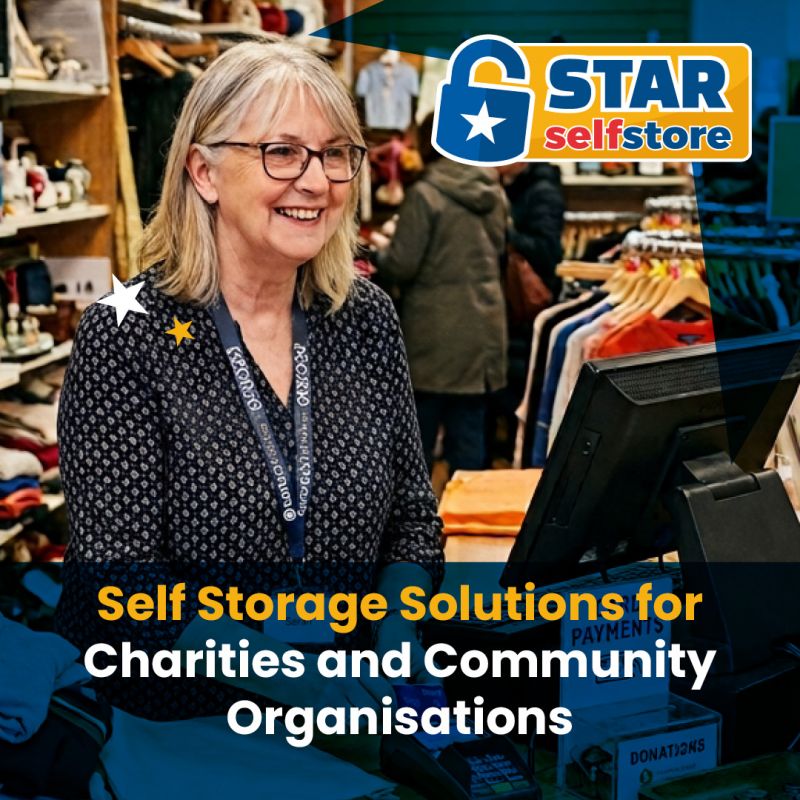
Charities and community organisations provide valuable support within communities across the UK, helping people, delivering services and bringing people together around important causes.
Behind this work is a huge amount of planning and organisation. Like any organisation, charities need suitable systems, equipment and resources to operate effectively. For many charities, having enough space to store the items that support their work is an important part of staying organised.
Self storage is already used by a number of charities and community organisations to help manage practical storage challenges. At STAR selfstore, we work with organisations that use storage for a variety of reasons, including keeping fundraising equipment, donations, supplies and project materials secure and accessible.
While every charity has different requirements, many face a similar challenge: finding flexible storage space without committing to larger premises.
Self storage provides charities with an adaptable solution, helping them make better use of their existing facilities while ensuring important items are stored securely.
The storage challenges charities face
Charities often have to make the most of the space available to them.
Many operate from smaller offices, shared community buildings or premises that are designed around delivering services rather than storing equipment, supplies or donated items.
As activities increase, storage requirements can quickly become more challenging.
A charity may need space for:
* Fundraising materials
* Event equipment
* Donations
* Community project supplies
* Promotional items
* Records and documents
* Seasonal campaign resources
Without suitable charity storage, these items can gradually begin to fill working areas and make everyday activities more difficult.
A dedicated storage solution allows charities to keep essential items organised while ensuring their main premises remain available for staff, volunteers and visitors.
Helping charities use their space more effectively
For many charities, every decision about spending needs careful consideration.
Taking on a larger building purely because of storage requirements may not always be practical. Larger premises often involve additional costs, longer commitments and increased responsibility.
Self storage offers an alternative by providing additional space without requiring charities to move location.
By keeping storage requirements separate from their main working environment, charities can create more effective spaces for the activities that directly support their work.
This means offices can remain offices, meeting spaces can remain available for meetings and community areas can continue to serve their intended purpose.
Supporting fundraising and community activities
Many charities rely on fundraising events and community activities to continue delivering their services. These events often require equipment and materials that are only needed at certain times throughout the year.
Self storage can provide a practical place to keep items such as:
*Event equipment
* Tables and chairs
* Outdoor displays
* Promotional materials
* Collection equipment
* Campaign resources
Rather than filling valuable workspace with items that are only occasionally needed, charities can store them securely and access them whenever required. This can make preparing for events simpler while helping keep everyday operations running smoothly.
Managing donations in an organised way
Donations are an important part of many charities' work, but managing donated items can create practical challenges. Successful appeals, seasonal collections and community donation drives can sometimes generate large quantities of items within a short period of time.
Having access to additional storage allows charities to manage these situations more effectively. Donations can be sorted, organised and stored until they are needed, without creating unnecessary disruption within the charity’s main premises.
This flexibility can be particularly valuable during busy periods when donation levels increase.
Supporting volunteers through better organisation
Volunteers are at the heart of many charities, and creating an organised environment helps them make the best use of their time.
When equipment, supplies and donations are stored logically, volunteers can spend less time searching for items and more time supporting the charity’s work.
A suitable storage solution can help charities:
* Locate items more quickly
* Prepare for events more efficiently
* Keep supplies organised
* Manage resources effectively
Small improvements to organisation can have a significant impact on the way charities operate day to day.
Why charities choose flexible self storage
One of the biggest advantages of self storage is flexibility.
Charities do not always need the same amount of space throughout the year. Requirements can change depending on fundraising campaigns, community projects, seasonal activities or changing levels of demand. Self storage allows organisations to adjust their space as their needs change.
Rather than committing to a permanent warehouse or larger building, charities can access additional capacity when it is needed while maintaining control over their costs.
Supporting charities and community organisations
Self storage can play an important role in helping charities and community organisations manage the practical side of their work.
At STAR selfstore, we work with organisations that use storage in different ways, from keeping fundraising materials organised to providing space for equipment, supplies and project resources.
While each organisation uses storage differently, the aim is often the same: creating more room to focus on the work that matters. By providing flexible storage solutions, self storage can help charities remain organised, efficient and prepared to support the communities they serve.
Creating more space for charitable work
For charities, having the right amount of space can make everyday operations easier.
The right storage solution can help create better working environments, support volunteers and ensure important equipment, donations and supplies are available when they are needed.Self storage gives charities the flexibility to manage their resources effectively while continuing to focus on the services and support they provide.
By reducing storage pressures, charities can spend less time managing space challenges and more time making a difference.
Frequently Asked Questions
Why do charities use self storage?
Charities use self storage for a range of reasons, including storing donations, fundraising equipment, event materials, supplies and documents. It provides additional space without requiring them to move to larger premises.
What can charities store in a self storage unit?
Charities may use self storage for donated goods, event equipment, promotional materials, campaign resources, archive documents and other items that need to be kept secure and accessible.
Is self storage suitable for small charities?
Yes. Self storage can be particularly useful for smaller charities that operate from limited premises and need additional space without taking on the cost of a larger building.
How can self storage help charities manage donations?
A storage unit provides a dedicated place to organise donated items, helping charities manage larger collections while keeping their main workspace clear.
Can charities use self storage for fundraising equipment?
Yes. Many charities use self storage to keep fundraising equipment, promotional materials and event supplies secure between activities.
Do charities need a large storage unit?
No. Charities can use self storage in different ways depending on their requirements. Some may need space for equipment and supplies, while others may only need occasional storage for fundraising materials, donations or events.
Self storage provides charities with the flexibility to manage their resources effectively while continuing to focus on the services and support they provide.
By creating more organised spaces, charities can spend less time managing storage challenges and more time making a difference.